Let's Talk About Pre-Orders
A long-winded manifesto that should cover everything you need to know

An unfortunate side effect of being Too Online™ is feeling like you need to weigh in on that day’s topic of conversation, even if you have nothing of value to add. For whatever reason, this effect turns into full psychosis within the sneaker and “culture” corner of the internet. Call it the Dunning Shoe-ger effect **dodges a million tomatoes being thrown at me**
But in a rare twist of fate, this month’s main storyline is actually something I know A LOT about. And I have great news: everyone’s wrong!
Let me explain…
Who the Fuck Are You?
I understand not everybody that reads these things understands the full body of my work. I have been involved in the e-commerce, brand, and marketing strategy world for 15 years, spending my last 7.5 consulting with some of the hottest American brands on how to grow digitally without looking corny.
As part of that work, I have overseen many, many pre-orders, including one that broke the Coachella artist merch record. So, when you read the next 600-1,000 words, trust that I am actually coming from a position of expertise, not just a loud mouth on the internet trying to get some attention (though I am that, too).
Why Do Brands Like Pre-Orders?
I’ll keep it simple. A pre-order system heavily rewards the brand side vs. the customer.
Accurate demand planning - you know exactly what to make and don’t have to figure out what to do with unsold units (everyone has unsold units)
Free cash flow - normally, you’d have to demand plan (see above), place the PO and at minimum pay a deposit on your production, with the balance coming due when you receive the units. Months later when that production is finished, you can finally sell it and try to make your money. Historically brands offset this with wholesale distribution where stores place their orders months in advance and pay the brand a deposit, helping to hedge the brand’s bet. But brick & mortar is fucked because all of the owners took on huge investment to cash out when the market was at the peak and every customer wants 40% off and free shipping to their one-horse-town PO box and will return half of what they buy. So now brands take on even more risk for more reward by prioritizing direct. Pre-orders solve that.
Faster reactions - modern existence moves at a speed that would give a victorian child whiplash like drinking McDonald’s sprite. Everyone wants a viral moment and to then maximize profit from said moment. The Knicks winning is a great example. You don’t want to produce that kind of product until you know who has won, but you also don’t want to try and sell shirts 8 weeks after the games are over and the hangovers have faded. You need to capture the moment RIGHT when it happens.
The tradeoff is mostly passed on to the customer - they’re the ones who have to wait the extended amount of time, despite having the money taken out of their account. The consumer is somehow meant to pay today for a hamburger next Tuesday.
Why I Usually Tell Brands Not to Run Pre-Order
If you can read between the lines of the above, you can see the conflict brewing. Customers’ money has been taken and there are 10 other things coming out that they want. The dopamine hit was harshed by the fact that MY SHOES STILL HAVEN’T SHIPPED WHERE ARE MY SHOES WHEN ARE THEY GOING TO SHIP THIS IS A SCAM YOU’RE ALL FRAUDS CHARGEBACK CHARGEBACK CHARGEBACK.
That’s what the poor customer service person (or LLM chatbot) is subjected to for the entire 4-12 weeks between order placed and order shipped. It becomes trench warfare, making the customer a nuisance for brand operations and the brand a scam in the eyes of the customer. We went from perfect operational efficiency to mutually assured destruction in 1 paragraph. Not ideal.
As a side note: chargebacks are really fucking bad for a merchant. These days somewhere around the 5-10% rate (meaning 10% of orders result in chargeback in a given window) are good enough to get your payments account clipped. And then you’re REALLY fucked. So as a brand - don’t fuck around here. As a customer - don’t fuck around here. Most people are trying their best.
I have managed pre-order drops before, during, and after COVID. The past 18 months have easily been the worst time ever to run one. I don’t know if you noticed, but the dementia-addled conman running the country (generous description) has absolutely fucked global trade from top to bottom. So after 3 years of TikTok streetwear courses and Alibaba conversations and side hustling your Hellstar knockoff, you have an incredible pre-order drop that you said would ship in 4 weeks. But this just in: a shipping route just got closed for who knows how long and now your product probably isn’t arriving for another 12 weeks and it’s going to cost 40% more than you thought whenever it does arrive. Game over.
You see my point?
There’s Nothing Wrong with Wanting to Eat Your Cake
What I’ve yet to discuss here is the growing conversation in the sneaker community about access to purchase hype drops. Raffles via EQL are the current solution, having replaced anti-bot attempts like specialized URLs, captchas, and checkout quizzes, among other clever cat and mouse tactics.
I spoke about this on the Sockjig podcast a few years ago, but this is a great opportunity for me to repeat one of my signature catchphrases:
“You don’t want sneakers to be easier to get. You want it to be easier for you to get sneakers”
Don’t pretend it’s not true. If I was wrong, there wouldn’t be weekly posts about shoes “sitting” or the “hype being dead” or whatever some LinkedIn analyst wants to say about Nike being one foot in the grave (I will be posting this article to LinkedIn).
The plain truth is that it feels really good to get a sneaker that not everyone else could get. That’s what the entire culture is about. It’s why StockX was worth a billion dollars and why people that treated you like a child 10 years ago suddenly have a pair of Travis Scott 1’s. Scarcity is the model, and defeating scarcity is the goal. It’s been like that for millenia.
A pre-order challenges the notion. It asks: if you KNOW you could get this shoe in exchange for having to wait an extended time, do you value it just as much?
This is what you as a consumer need to ask yourself and come to terms with by your own compass: do you want things to be easier at the expense of the instant gratification or are you willing to humbly take your L’s chasing the next great hit?
A Case Study & Some Important Definitions
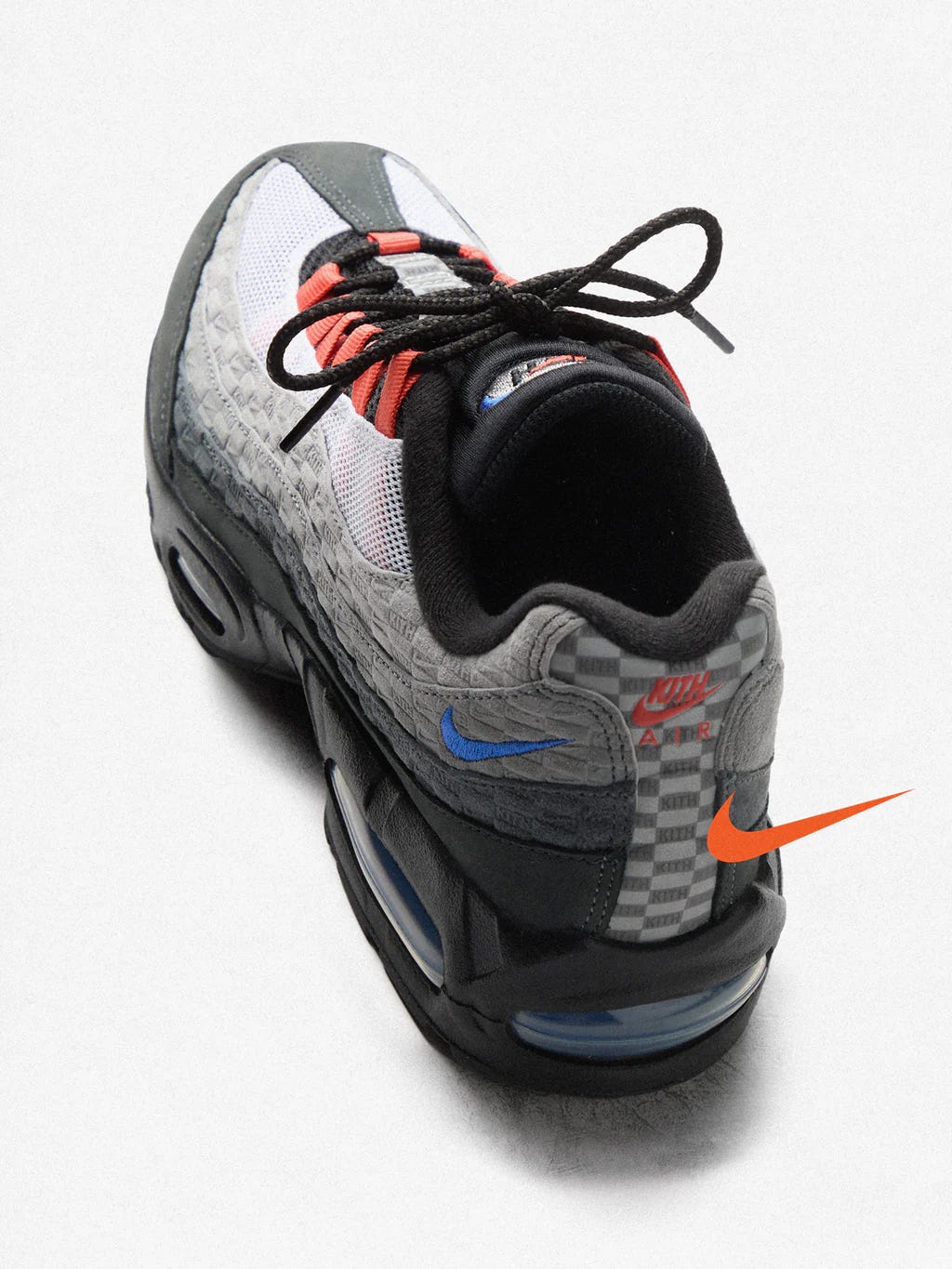
There have been a lot of pre-orders lately that motivated me to write this, but the primary one is the Kith x NYC Airmax 95. I know, 2 Kith posts in a row. They’re easily one of the top commercial drivers in the category right now and work with a higher tier of brand partners at a scale that is untouched. Sue me that they became a great case study.
Quick background - there’s been images of the pair floating for awhile. As the Knicks marched forward in their manifest destiny of the Larry O, the team at Kith worked with Nike to get a production run in of the shoe in their already-strained calendar. It’s a unique, and frankly cool moment to connect an NY brand with an NY team and capture a cultural moment.
Two things hampered the roll out:
It’s a pre-order, meaning you need to wait about 6 months to get the shoe
They offered exclusive access to the pre-order slots
That second thing is what ruffled a lot of feathers, but I don’t see anything wrong with it. The only mistake is leaving ambiguity in the terminology.
Allow me to define:
pre-order - the act of selling products in an unlimited capacity to be produced and shipped at a later date with the ultimate goal of correctly satisfying the supply and demand curve
pre-sell - the selling of a pre-determined total quantity of products before they are produced, working within the production constraints of the manufacturer without requiring the seller to predict sizing distribution
Where the Kith rollout got a little messy is not clearly defining what was happening.
Much like many drops I’ve ran in the past few years, the pre-sell process runs like this:
Manufacturer tells brand they can make XX units of a product in a specific window of time
Brand offers that many units for sale, cutting off the sale once that total number has been hit, but allowing for an open distribution among sizes, meaning it doesn’t have to be an equal number of small, medium, large, etc.
Brand places PO for that exact amount, possibly with some padding for damages, exchanges, lost packages, etc.
This is a great system and likely exactly what Kith was attempting to do. Let me explain using fake numbers (I have no inside information).
Nike says “We can open a slot to product 5,000 pairs of AM95s. They will ship to you in 6 months. Just tell us how many of each size." A pre-sell is perfect. There’s just one problem.
Way more that 5,000 people are going to want these. How do we solve for that? How about we use our very successful and well-tested exclusive access system?
It’s a solid plan and probably exactly what I would’ve done. The problem was not in the process, but the perception.
To the average customer, all they saw was that they had to win a raffle just for the right to pre-order a shoe that they won’t even get for 6 months. The audacity! And thus, a week of some truly dumb twitter conversations commence.
Wrap It Up Already, Corey
Thank you if you made it this far. What started as a quick post quickly became a magnum opus on a very specific thing. Earlier I alluded to 600 words. It’s now crossed 1,800. Whoops.
What I hope I’ve communicated here is the intricate complexity behind executing a pre-sell or a pre-order drop, the motivations for the brand and the customer, and all of the places it could go wrong.
Hopefully, this can live on as a reference point for brands in the future. Consider it one step on my mission to chase all of the opportunists and course-sellers out of streetwear. Or just to make sneakers a better place. I would also be remiss not to say that if you own or work for a brand and are having trouble executing you pre-sell programs, I would probably love to advise you. Let’s get in touch.